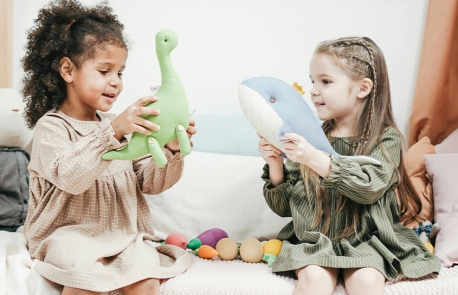
For preschoolers, play isn’t just about having fun it’s a critical part of their learning and development. At Creative Mind Preschool, we understand the powerful role play
essential skills, encouraging curiosity, and supporting emotional well-being. Here’s why play is so important for preschoolers and how it shapes their growth.
1. Enhances Cognitive Development
Play allows children to explore new concepts, experiment, and learn through discovery. Whether they’re building with blocks, engaging in imaginative play, or solving puzzles, they are developing critical thinking and problem-solving skills. This hands-on learning encourages creativity and teaches preschoolers how to think independently and tackle challenges from different angles.
2. Improves Social Skills
Group play is one of the first opportunities for preschoolers to practice interacting with others in a social setting. Through play, children learn how to share, negotiate, take turns, and communicate effectively. These early social interactions are crucial for developing empathy, cooperation, and the ability to form friendshipsâ€â€skills that will benefit them throughout life.
3. Boosts Language and Communication
Play provides countless opportunities for children to develop language and communication skills. Whether they’re engaging in imaginative play or working on collaborative activities, they use language to express themselves, describe their ideas, and communicate with their peers. This helps expand their vocabulary, improve sentence structure, and build confidence in expressing their thoughts and feelings.
4. Encourages Physical Development
Active play is essential for developing motor skills in preschoolers. Running, jumping, climbing, and playing with toys or balls help children improve coordination, balance, and overall physical strength. Fine motor skills, such as using scissors, holding a pencil, or manipulating small objects, are also developed during playtime, preparing children for more structured learning later on.
5. Fosters Emotional Growth
Play gives children a safe space to express their emotions, experiment with different roles, and navigate new experiences. Whether they’re pretending to be a teacher or taking care of a stuffed animal, imaginative play helps children process their feelings and build emotional resilience. It also provides an outlet for managing stress and understanding complex emotions in a supportive environment.
6. Supports Creativity and Imagination
Unstructured playtime allows preschoolers to explore their imaginations and creativity. Whether they’re drawing, building with blocks, or pretending to be superheroes, this freeform play encourages them to think creatively and explore new ideas. Encouraging imagination helps foster innovative thinking, which will be essential in both academic and personal growth as they get older.
Conclusion
Play is far more than just an activity for preschoolersâ€â€it’s the foundation of how they learn, grow, and develop into well-rounded individuals. At Creative Mind Preschool, we prioritize play as a vital part of our curriculum, ensuring that every child can explore, create, and develop the essential skills they need for future success. By encouraging children to play, we’re helping them build the cognitive, social, physical, and emotional skills that will support them for years to comeessential skills, encouraging curiosity, and supporting emotional well-being. Here’s why play is so important for preschoolers and how it shapes their growth.
1. Enhances Cognitive Development
Play allows children to explore new concepts, experiment, and learn through discovery. Whether they’re building with blocks, engaging in imaginative play, or solving puzzles, they are developing critical thinking and problem-solving skills. This hands-on learning encourages creativity and teaches preschoolers how to think independently and tackle challenges from different angles.
2. Improves Social Skills
Group play is one of the first opportunities for preschoolers to practice interacting with others in a social setting. Through play, children learn how to share, negotiate, take turns, and communicate effectively. These early social interactions are crucial for developing empathy, cooperation, and the ability to form friendships skills that will benefit them throughout life.
3. Boosts Language and Communication
Play provides countless opportunities for children to develop language and communication skills. Whether they’re engaging in imaginative play or working on collaborative activities, they use language to express themselves, describe their ideas, and communicate with their peers. This helps expand their vocabulary, improve sentence structure, and build confidence in expressing their thoughts and feelings.
4. Encourages Physical Development
Active play is essential for developing motor skills in preschoolers. Running, jumping, climbing, and playing with toys or balls help children improve coordination, balance, and overall physical strength. Fine motor skills, such as using scissors, holding a pencil, or manipulating small objects, are also developed during playtime, preparing children for more structured learning later on.
5. Fosters Emotional Growth
Play gives children a safe space to express their emotions, experiment with different roles, and navigate new experiences. Whether they’re pretending to be a teacher or taking care of a stuffed animal, imaginative play helps children process their feelings and build emotional resilience. It also provides an outlet for managing stress and understanding complex emotions in a supportive environment.
6. Supports Creativity and Imagination
Unstructured playtime allows preschoolers to explore their imaginations and creativity. Whether they’re drawing, building with blocks, or pretending to be superheroes, this freeform play encourages them to think creatively and explore new ideas. Encouraging imagination helps foster innovative thinking, which will be essential in both academic and personal growth as they get older.
Conclusion
Play is far more than just an activity for preschoolers it’s the foundation of how they learn, grow, and develop into well-rounded individuals. At Creative Mind Preschool, we prioritize play as a vital part of our curriculum, ensuring that every child can explore, create, and develop the essential skills they need for future success. By encouraging children to play, we’re helping them build the cognitive, social, physical, and emotional skills that will support them for years to come